



When the Founder Becomes the Bottleneck: The Psychology Behind Business Growth
A successful entrepreneur can be the biggest asset to a business.
But at a certain stage of growth, the founder can also become its biggest constraint.
Every decision comes back to them. Employees wait for their approval. Clients expect their involvement. Problems that should be resolved within the organisation continue to reach the founder.
From the outside, this may look like an operational problem.
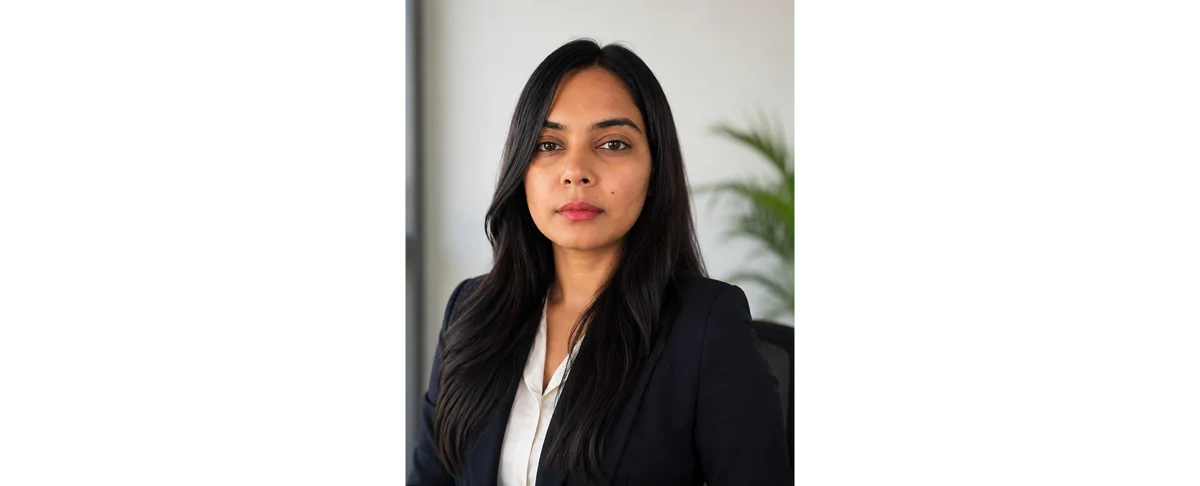
Leadership Psychologist and entrepreneur Namratha Vijaykumar believes there is often a psychological dimension underneath it.
After 27 years in entrepreneurship and through her work with founders and executive leaders, Namratha has observed that the behaviours that help entrepreneurs build their businesses can sometimes become the very behaviours that prevent them from scaling.
When strengths turn into limitations
Entrepreneurs are often celebrated for being highly driven, independent, decisive and deeply involved in their businesses.
Those qualities can be essential in the early stages.
But as a business grows, the same qualities can require modification.
A founder who built the company by personally solving every problem may find delegation uncomfortable.
An entrepreneur who has always relied on their own judgement may struggle to trust others with important decisions.
Someone whose identity has become closely connected to being indispensable may find it difficult to step away.
According to Namratha, the issue is not that these qualities are inherently negative.
“The question is whether the behaviour that helped you reach your current level is still helping you reach your next level,” she says.
That distinction can be particularly important for entrepreneurs who feel that their businesses have stopped growing despite considerable effort.
Knowing is not always enough
One of the recurring themes in Namratha’s work is the gap between awareness and action.
A founder may understand that they need to delegate.
They may know that they are micromanaging.
They may recognise that they are working too much.
They may even understand that their team needs more autonomy.
Yet the behaviour continues.
This is where Namratha believes psychological understanding can add another layer to conventional business advice.
Instead of asking only What should the entrepreneur do differently?, she looks at questions such as Why is this behaviour difficult to change? What belief is maintaining it? What happens emotionally when the founder tries to respond differently?
These questions can reveal patterns that are not obvious from a business strategy perspective.
The founder has to evolve with the business
The transition from entrepreneur to organisational leader can require a significant psychological shift.
In the early stages, the founder may be the person who knows the most about the business.
As the company grows, the founder’s role needs to change.
The goal becomes less about knowing everything and more about creating an organisation where other people can make good decisions.
That requires trust.
It requires tolerance for uncertainty.
It requires the ability to let go of control without losing accountability.
And it requires a leader who is willing to examine their own behaviour as closely as they examine the performance of their business.
This is where Namratha’s experience as both an entrepreneur and a Leadership Psychologist becomes particularly relevant.
Her work with executive leaders focuses not only on leadership capability but also on the psychological and behavioural factors that influence performance and transformational growth.
The wellbeing question
There is another issue closely connected to founder psychology: wellbeing.
Entrepreneurial culture often celebrates long hours, constant availability and the ability to keep going regardless of pressure.
But sustainable growth cannot depend indefinitely on a founder operating in a state of permanent urgency.
Namratha believes that mental wellness needs to become part of the conversation around business growth rather than being treated as a separate subject.
A leader’s wellbeing affects decision-making, relationships, communication and the ability to sustain performance.
The same principle applies to employees.
A business cannot realistically pursue productivity while treating the psychological wellbeing of its people as an unrelated concern.
From founder dependency to organisational maturity
For Namratha Vijaykumar, the ultimate objective is not to make founders less ambitious.
It is to help them understand what their next stage of leadership requires.
The entrepreneur who starts a company often needs to be deeply involved.
The leader who scales that company needs to build systems, develop people and create an organisation that can function beyond their constant presence.
That transition is simultaneously operational, strategic and psychological.
And perhaps that is why some business growth problems cannot be solved by another business strategy alone.
Sometimes the next stage of the business begins with the person leading it.