

Skip links
Dr. Anand R Fadte

Dr. Anand R Fadte: The Future of AI in Insurance

Why the Next Generation of Underwriting AI Won’t Be a Model It Will Be an Agent

For thirty years, insurance underwriting has been conquered by prediction models. The next thirty years will belong to a fundamentally different architecture.

By Dr. Anand R Fadte

CTO – Aviantos | 24th  August 2026

For three decades, insurance underwriting has been quietly conquered by machine learning. Generalised linear models displaced actuarial tables in the 1990s. Gradient-boosted trees displaced GLMs in the 2010s. Deep learning arrived shortly after. Each generation squeezed another few percentage points out of the loss ratio, and each generation was, at its core, the same thing: a prediction function that took an application in and returned a risk score out.

That era is ending. And what replaces it is not a better model — it is a different kind of software altogether.

The Prediction Plateau

Talk to the chief underwriting officer of almost any major carrier and you will hear a version of the same story. The prediction models are good — very good. On structured data, accuracy has plateaued somewhere between 82% and 90% for most lines of business. Getting from 88% to 89% now costs a data-science team six months and a seven-figure budget. Loss ratios across the industry have compressed to within basis points of each other. The market has, in effect, hit the ceiling of what a model can do when the model’s only job is to predict.

The next few percentage points are not hiding in a better algorithm. They are hiding in a different architecture entirely.

What “Agent” Actually Means

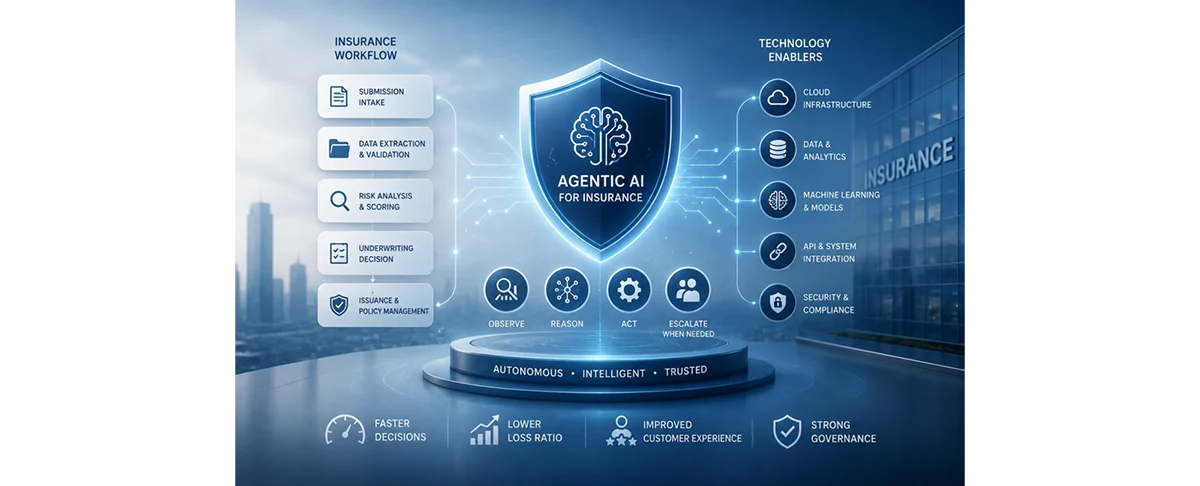
The word “agent” has been badly overused in the last two years, so let me be precise. An agent is not a chatbot. It is not a large language model with a friendly wrapper. In the technical sense that matters for insurance, an agent is a system that:

  • Receives a goal, not a prompt.
  • Plans a sequence of steps to achieve that goal.
  • Invokes external tools — a rulebook, a rating table, a risk model, a claims database — as part of that plan.
  • Observes the output of each tool and updates its plan accordingly.
  • Produces a decision with an explanation that is traceable to each step it took.

A prediction model asks: what is the risk of this applicant? An agent asks: what is the right decision for this applicant, given the rules, the risk table, the product catalogue, the historical precedent, and the confidence I have in each of those inputs?

That is a fundamentally different computational shape. And it is what the next generation of underwriting AI is being built around.

Three Capabilities Agents Unlock That Models Cannot

Reasoning across sources.

A prediction model sees one input space — the fields on the application. An agent can, mid-decision, retrieve the current version of a regulatory circular, look up an actuarial risk factor, pull the applicant’s prior policy history, and cross-reference all three. Complex cases that used to require a senior underwriter can now be assembled by the agent and handed to that underwriter fully cited.

Explainability by construction.

The single largest complaint against machine-learning underwriting has always been explainability. A gradient-boosted tree gives you SHAP values; an agent gives you an audit trail. When an agent recommends a conditional accept, the reason is not a feature-importance chart — it is a numbered list: rule R-04 applied, risk factor RF-12 triggered a 15% loading, prior claim in policy year 2024 flagged. Regulators globally — EIOPA in Europe, the PRA in the UK, NAIC in the United States, MAS in Singapore — are converging on precisely this kind of provenance requirement.

Dr. Anand R Fadte

Self-supervision and confidence gating.

This is the least appreciated shift. A prediction model does not know when it is wrong. An agent, properly designed, produces a confidence score, evaluates its own reasoning, and — critically — escalates to a second-pass verification when its own confidence drops below a threshold. Recent work on confidence-gated adversarial critique has shown that this selective self-verification catches most otherwise-hallucinated conclusions at less than a tenth of the computational cost of verifying everything. For insurers whose margins are measured in basis points, that cost differential is the difference between a viable deployment and a research demo.

The Shift Is Already in Production

This is not a future-looking essay. The shift is already visible in production. Progressive has deployed agent-style architectures in parts of its auto underwriting stack. Ki, the Lloyd’s-market algorithmic syndicate, has effectively built its entire business around one. Lemonade has publicly credited its Maya and AI Jim agents with sub-two-second quote-to-bind for standard homeowners applications. And reinsurers including Munich Re and Swiss Re now offer “AI risk” cover for carriers deploying agentic systems — an implicit acknowledgement that this architecture is arriving whether the industry is ready or not.

What This Does Not Mean

None of this is a promise of full autonomy. Every serious deployment I know of keeps a human underwriter in the loop for the final decision, and every serious regulator requires it. What the agent architecture does is compress the underwriter’s job from evaluation to authorisation. The underwriter reviews a fully cited recommendation in thirty seconds instead of building the case from scratch over three days. That is a productivity gain of two to three orders of magnitude, and it is happening now.

The Strategic Implication

The carriers that will win the next five years are not the ones with the biggest data-science teams. They are the ones who understand that they are no longer buying prediction models — they are architecting decision systems. The build-versus-buy conversation changes. The vendor conversation changes. The regulatory conversation changes. Even the org chart changes: the chief data officer of 2020 becomes the chief AI officer of 2028, and the underwriting function begins to look less like a factory and more like a control tower.

The prediction era gave insurers accuracy. The agent era will give them speed, scale, and decisions that can be defended line by line to a regulator, a broker, or a customer. It is not a marginal improvement on the last thirty years of insurance AI. It is a different thing entirely.

— — —

About the author

Dr. Anand R. Fadte is Chief Technology Officer at Aviantos and a technology leader specializing in enterprise AI, Generative AI, agentic AI, and AI solution architecture. He writes on AI strategy, enterprise AI architecture, LLM applications, and responsible AI adoption, with a particular focus on regulated industries such as insurance, banking, and fintech. With 22+ years of global technology leadership experience and 40+ awards and recognitions, he brings a practitioner’s perspective to building and scaling AI solutions that deliver measurable business value.

Connect with him on

LinkedIn: linkedin.com/in/anandf-ai-head

Website: www.fadte.com

Mengapa Struktur Vokal Kakek Zeus Bikin Kagum PendengarTrik Gerakan Memutar Moncong Senjata Wild Bandito Sangat HalusStandar Tata Akustik Ruang Kedap Siaran Studio Live KasinoAlasan Tema Mahjong Ways 1 Menjadi Cetak Biru Game ModernRahasia Sepuhan Warna Mahjong Wins 3 Tampak Begitu MenyalaBukan Sekadar Sosok Bedah Simbol Mahkota Megah Kakek ZeusTrik Manajemen Buffer PG Soft Singkirkan Waktu MenungguMengapa Denting Logam Ubin Mahjong Ways 3 Curi Fokus CepatRahasia Pengaturan Bandwidth Adaptif Server Global PragmaticKarakter Topi Lebar Koboi Wild Bandito Kuatkan Cerita TemaMengapa Lensa Kamera Live Kasino Hasilkan Kedalaman SempurnaAlasan Sudut Pandang Mahjong Wins 1 Bikin Pengguna BetahBukan Efek Instan Sketsa Partikel Badai Halus OlympusTrik Frekuensi Akustik Kakek Zeus Rangsang Saraf PendengaranMengapa Pergeseran Ubin Mahjong Ways 2 Begitu MenyenangkanStandar Kriptografi Sinyal Meja Permainan Live KasinoAlasan Dentuman Dinamis Wild Bandito Ciptakan Sensasi MagisTrik Palet Tradisional Mahjong Wins 2 Berpadu ModernitasMengapa Visual Kolosal Olympus Sukses Mengunci AntusiasmeRahasia Tata Letak Bersih Mahjong Ways 1 Mudah DipahamiBukan Server Rapuh Fondasi Jaringan Pragmatic Tahan BebanAlasan Kord Audio Kakek Zeus Selalu Bikin Penasaran PikiranTrik Animasi Halus Mahjong Wins 3 Hadirkan Nuansa BerkelasMengapa Tekstur Wajah Karakter Wild Bandito Sangat NyataStandar Reduksi Gema Ruang Khusus Siaran Live KasinoRahasia Pemilihan Warna Kontras Mahjong Ways 2 Sangat PasBukan Sekadar Musik Game Ponsel Bedah Karya Seni PG SoftAlasan Pancaran Cahaya Kakek Zeus Ciptakan Efek DramatisTrik Transparansi Lapisan Visual Mahjong Ways 3 Rapi Sekali
RTP dan Volatilitas Mahjong Ways 2 Sering Dianggap Sama Padahal Memiliki Fungsi yang BerbedaPerubahan Nilai Kemenangan Mahjong Ways 2 Menjadi Menarik Ketika Diamati dalam Rentang Waktu BerbedaPerubahan Ritme Permainan Mahjong Ways 2 Terlihat Berbeda Ketika Hasil Dicatat dalam Beberapa SesiMahjong Ways 2 dan Cara Pemain Membaca Variasi Hasil Tanpa Terjebak pada Kesimpulan Terburu-BuruPerbedaan Mekanisme Mahjong Ways dan Mahjong Ways 2 yang Menarik Dilihat dari Struktur PermainannyaMahjong Ways 2 dan Fenomena Momentum Semu yang Muncul dari Urutan Hasil Berturut-turutCatatan Hasil Sederhana Dapat Membantu Melihat Variasi Mahjong Ways 2 Secara Lebih ObjektifVolatilitas Mahjong Ways 2 Memberikan Gambaran Baru Tentang Naik Turunnya Hasil dalam Satu SesiIkon Berulang pada Mahjong Ways 2 Belum Tentu Menandakan Pola yang Bisa DiandalkanMengapa Hasil Mahjong Ways 2 Dapat Terlihat Berbeda dari Satu Sesi ke Sesi BerikutnyaPola Simbol Mahjong Ways 2 Terlihat Menarik, Tetapi Probabilitas Tetap Menjadi Bagian Penting dalam AnalisisMengapa Tampilan Visual Mahjong Ways 2 Berperan dalam Membentuk Persepsi Pengguna Saat Bermain5 Faktor yang Membentuk Pengalaman Bermain Mahjong Ways 2 dari Sudut Pandang StatistikMahjong Ways 2 dalam Kajian Data: Memisahkan Variasi Acak dari Pola yang Terlihat KonsistenPeran Scatter dan Wild pada Mahjong Ways 2 Dilihat dari Fungsi serta Pengaruhnya terhadap PermainanMahjong Ways 2 di Tengah Perkembangan Game Mobile dengan Mekanisme dan Visual yang Semakin KompleksGranularitas Data Mengubah Cara Hasil Mahjong Ways 2 Dibaca dan Dibandingkan Antar SesiCara Memahami Perubahan Hasil Mahjong Ways 2 Tanpa Menganggap Setiap Urutan sebagai Sebuah PolaStruktur Pembayaran Mahjong Ways 2 Menawarkan Perspektif Berbeda dalam Memahami Variasi Kemenangan5 Hal yang Perlu Dipahami Sebelum Membandingkan Hasil Mahjong Ways dengan Mahjong Ways 2Pengaruh Frekuensi Putaran terhadap Cara Pemain Menilai Hasil Mahjong Ways 2Kesalahan Umum Saat Membaca Hasil Mahjong Ways 2 Berdasarkan Beberapa Putaran SajaPerbandingan Pola Simbol Mahjong Ways 2 dan Mahjong Ways Dilihat dari Cara Kemenangan TerbentukBuy Spin pada Mahjong Ways 2 Mengubah Cara Sebagian Pengguna Berinteraksi dengan Fitur PermainanKetika Ikon Muncul Berturut-turut, Mahjong Ways 2 Rentan Membentuk Persepsi Pola yang Belum Tentu AkuratMahjong Ways 2 Bisa Terasa Berbeda pada Setiap Sesi karena Variasi Hasil Tidak Selalu Berjalan SeragamAnalisis Statistik Mahjong Ways 2 Membantu Menempatkan Hasil Permainan dalam Konteks yang Lebih TepatPerbedaan Persepsi Pemain terhadap Mahjong Ways 2 Ketika Hasil Permainan Dicatat Secara BerjenjangTeknologi Real Time dan Perkembangan Infrastruktur Digital di Balik Pengalaman Game Mahjong Ways 25 Elemen Mahjong Ways 2 yang Membentuk Struktur Permainan dari Simbol hingga Fitur BonusPerbedaan Ukuran dan Bentuk Ubin Mahjong Ways 2 Dibandingkan Versi Sebelumnya Menarik untuk DiamatiFitur Permainan Mahjong Ways 2 dan Pengaruhnya terhadap Cara Pengguna Mengambil KeputusanVariasi Kemenangan Mahjong Ways 2 Lebih Mudah Dipahami Ketika Data Tidak Hanya Dilihat dari Satu PutaranPengelolaan Modal Tetap Menjadi Pertimbangan Penting Ketika Membahas Aktivitas Mahjong Ways 2Mengapa Data Jangka Pendek Mahjong Ways 2 Tidak Selalu Cukup untuk Menilai Karakteristik PermainanMahjong Ways 2 dalam Perspektif Probabilitas: Mengapa Hasil Sebelumnya Tidak Menentukan Putaran BerikutnyaEvolusi Mahjong Ways 2 Memperlihatkan Bagaimana Tema Tradisional Beradaptasi dengan Format Game DigitalPopularitas Mahjong Ways 2 Menunjukkan Perubahan Selera Pengguna terhadap Game Bertema TradisionalMahjong Ways 2 dan Peran Teknologi dalam Menghadirkan Pengalaman Permainan yang Lebih ResponsifDari Visual hingga Mekanisme, Mahjong Ways 2 Menawarkan Banyak Sudut untuk Dikaji dalam Permainan Digital
Pola AkuratPola Hari IniPola GacorPola Rtp LivePola SlotPola AkuratPola Hari IniPola GacorPola Rtp LivePola SlotPola AkuratPola Hari IniPola GacorPola Rtp LivePola SlotPola AkuratPola Hari IniPola GacorPola Rtp LivePola SlotMahjong WaysMahjong Ways 2Mahjong Wins 3Pragmatic PlayRtp LiveMahjong WaysMahjong Ways 2Mahjong Wins 3PgsoftSlot GacorRtp LiveMahjong WaysMahjong Ways 2Mahjong Wins 3Pragmatic PlaySlot Gacor Hari IniRtp LiveMahjong WaysMahjong Ways 2Mahjong Wins 3Analisa Mikrostruktur Mengurai Perubahan Kecil dalam Rangkaian AktivitasDiferensiasi Cahaya Starlight Princess 1000 Memisahkan Kedalaman Setiap LapisanDimensionalitas Ruang Gates of Olympus Terbentuk melalui Susunan BertingkatEfisiensi Backend Kasino Online Dievaluasi melalui Parameter Utilisasi SistemEksplorasi Parametrik Menguji Perubahan Respons melalui Rentang Nilai BerlainanEvaluasi Heuristik Membandingkan Strategi Pemrosesan dalam Skenario Interaktif KompleksFluktuasi Mahjong Wins 3 Mengubah Profil Komposisi Antarperiode ObservasiGame Digital Mengatur Pemrosesan Event melalui Urutan Pemicu SistemGame Online Mengatur Sinkronisasi State melalui Infrastruktur Server TerdistribusiGates of Olympus Menampilkan Struktur Perspektif melalui Kedalaman SpasialHierarki Luminansi Starlight Princess 1000 Menentukan Fokus Elemen GrafisInstrumentalitas Pragmatic Play Memperjelas Pengukuran Performa Sistem BerlapisInterpretasi Dinamis Menyesuaikan Pembacaan Data terhadap Pergeseran Kondisi SistemInterval Repetisi Scatter Hitam Menggambarkan Variasi Antarkelompok PengamatanKasino Digital Mengembangkan Federasi Infrastruktur untuk Menghubungkan Komponen IndependenKasino Online Menggunakan Komputasi Elastis untuk Menangani Variasi TrafikKecerdasan Kontekstual Menyesuaikan Interpretasi berdasarkan Karakter Aktivitas BerubahKontinuitas Kanal Live Casino Menjaga Aliran Informasi selama TransmisiKronografi Digital Mahjong Kasino Online Memetakan Urutan Kejadian SistemKuartil Mahjong Wins 2 Membagi Distribusi Kemunculan secara Proporsional
Explore
Drag