



The Emotional Geography of Home: Nostalgia, Identity, and the Psychology of Slowing Down
Sonali Ojha
Clinical and Research Psychologist
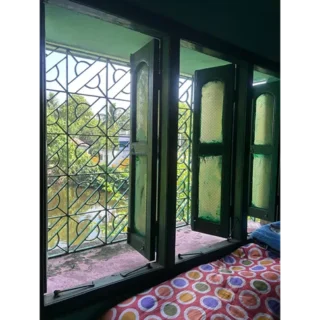
Every Durga Puja, when I return to our native village, my in-laws’ home, where my husband grew up, a place where I had begun a new chapter of life almost thirty years ago, I experience something that is difficult to explain. It’s not simply the happiness of revisiting a familiar place; it is a strange emotional encounter with memories, relationships, and, perhaps most importantly, a version of myself I had left behind. The village has changed over the years, and so have I, yet something remained remarkably familiar. The narrow lanes, the rhythm of everyday activities, the sounds of village life, and the unhurried conversations seemed to carry fragments of a past that had quietly settled somewhere in my memory. I realised that I was not merely revisiting a geographical location. I was revisiting a psychological landscape.
Thirty years ago, when I began my married life here, my aspirations were different. Like many young women beginning a new phase of life, I was eager to explore opportunities, establish my identity, and move towards a future that promised growth and independence. The slower rhythm of village life sometimes felt limiting. The larger world seemed to offer possibilities that this small place could not. Yet three decades later, standing in the same surroundings, I found myself appreciating precisely what I had once been eager to move beyond and asked myself, Why does a life we once wanted to leave behind sometimes become the very life we long to revisit?
Why does this happen? Is it memory that becomes an emotional bridge of nostalgia or something else?
Psychology offers a fascinating explanation through the concept of nostalgia, an emotionally complex experience involving autobiographical memory, attachment, and self-continuity. Research by Constantine Sedikides and colleagues suggests that nostalgia can serve important psychological functions, including strengthening feelings of social connectedness, meaning in life, and continuity of identity. Nostalgia is not simply remembering the past. It is the emotional reconstruction of experiences that once shaped our sense of self. As I walked through familiar surroundings, memories emerged almost involuntarily. Ordinary sights and sounds became powerful retrieval cues, activating episodes from my autobiographical memory.
In cognitive psychology, this process is associated with cue-dependent retrieval, where environmental stimuli trigger previously encoded memories. A familiar courtyard, a particular fragrance, or the sound of evening prayers can suddenly transport us across decades. Interestingly, nostalgia often involves what psychologists describe as rosy retrospection, the tendency to remember past experiences more favourably than we evaluated them while living through them. Perhaps the village is the same as it used to be, but my psychological relationship with it has changed.
Place Attachment: Why Certain Places Become Part of Us

Environmental psychology introduces another important concept of place attachment. Developed through the work of researchers such as Irwin Altman and Setha Low, place attachment refers to the emotional bonds individuals develop with meaningful physical environments. Some places become more than locations. They become repositories of relationships, experiences, transitions, and personal history.
My in-laws’ village was not merely where I had lived. It was where I had entered a new family, negotiated unfamiliar responsibilities, experienced emotional adjustments, and gradually constructed a new identity. In psychological terms, the village had become integrated into my place identity, a concept associated with environmental psychologist Harold Proshansky. Place identity suggests that our sense of self is partly shaped by the physical environments in which significant life experiences occur. Returning every year is therefore more than a visit. It’s a reunion with an important part of my identity.
The Psychology of Slowing Down
Modern urban life is frequently characterised by accelerated routines, continuous stimulation, performance expectations, and competing responsibilities.
Our attention is constantly divided between tasks, deadlines, digital communication, and future-orientated thinking. In contrast, the slower rhythm of village life can create opportunities for psychological restoration. Stephen and Rachel Kaplan’s Attention Restoration Theory suggests that certain environments, particularly natural settings, can help replenish directed attention that becomes fatigued through prolonged cognitive demands. Although rural environments are not automatically restorative, their greenery, open spaces, familiar surroundings, and opportunities for unstructured reflection may provide conditions conducive to mental recovery.
During my visit, I noticed how ordinary activities acquired a different meaning. Conversations did not always require an appointment. Silence did not necessarily feel uncomfortable. Time was not constantly measured by productivity. There was something psychologically liberating about experiencing moments without the pressure to make them useful. I began wondering whether our increasingly accelerated lifestyles have gradually conditioned us to associate stillness with inactivity and productivity with personal worth. Perhaps slowing down is not a withdrawal from life but an opportunity to experience it more consciously.
Meeting the Person We Once Were
One of the most profound aspects of returning to an emotionally significant place is the encounter between our past and present identities.
Psychologist Dan McAdams’ Narrative Identity Theory proposes that individuals construct a sense of self through an evolving internal life story, connecting remembered experiences with present circumstances and imagined futures. Over thirty years, our identities undergo numerous transformations. We become spouses, parents, professionals, carers, and individuals carrying responsibilities that our younger selves could scarcely have imagined. Yet beneath these evolving roles remains a sense of psychological continuity. Returning to the village reminded me of the young woman who had once stood there, uncertain about the future but full of aspirations. The difference was that I now viewed her experiences through the lens of maturity, accumulated knowledge, and emotional understanding.
Psychologists mostly refer to this process as autobiographical meaning-making, through which individuals reinterpret past experiences in the context of their present identities. What once appeared restrictive may later be understood as formative. What once seemed ordinary may acquire emotional significance.
The Paradox of Leaving and Returning
Perhaps the most intriguing psychological question is why we sometimes long to return to the very places we once wanted to leave. The answer may lie in the changing nature of human psychological needs. During early adulthood, autonomy, exploration, achievement, and identity formation often become important developmental priorities. Later in life, belonging, emotional connectedness, meaning, and continuity may become increasingly salient. This does not mean that ambition disappears with age. Rather, our understanding of fulfilment becomes more complex. I had needed to leave to explore who I could become. Perhaps I needed to return to appreciate where that journey had begun.
Home Is Also a State of Mind
As Durga Puja celebrations brought familiar sounds, rituals, and shared memories into the village, I realised that returning home is not always about recovering the past, but revisiting meaningful environments allows us to integrate different chapters of our lives. The village reminded me that psychological growth does not always involve moving forward. Sometimes it involves looking backwards with greater understanding.
We may leave a place in search of identity, only to return years later and discover how deeply that place had already become part of who we are. Perhaps that is the emotional geography of home. Not merely the place where we once lived, but the place where our memories, identities, and emotions continue to meet. And sometimes, after spending years learning how to move faster, we return to discover the quiet psychological value of slowing down.